-
home
- About Us
- Product Center
-
energy industry
-
chemical industry
-
Grain and oilseed industry
-
paper industry
-
pharmaceutical industry
-
iron and steel industry
-
Gearbox accessories
- Industry Applications
- industry case
- News
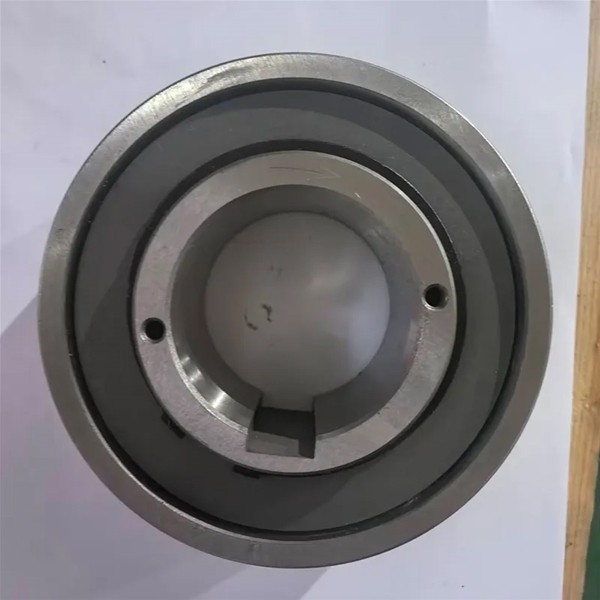
overrunning clutch
- Type:Gearbox accessories
- Code:

-
The overrunning clutch in the reducer is a critical safety protection device, whose main function is to prevent equipment from reversing in the event of power failure, malfunction, or shutdown, thereby avoiding equipment damage, material loss of control, or personnel injury accidents.
- Product Description
The overrunning clutch in the reducer is a critical safety protection device, whose main function is to prevent the equipment from rotating in the opposite direction (reverse) during power outages, malfunctions, or shutdowns, thereby avoiding equipment damage, material loss of control, or personnel accidents.
The specific functions are as follows:
1. Prevent reversal and ensure safety: When the equipment driven by the reducer has a tendency to rotate in reverse due to load (such as material gravity) or inertia, the overrunning clutch will immediately lock the transmission system, forcibly preventing reverse movement.
2. Implement one-way transmission: The internal mechanical structure of the overrunning clutch (such as rollers, wedges, or ratchet mechanisms) allows power to be transmitted in the normal direction, but once reverse torque is detected, it will automatically lock, achieving“ Unidirectional free rotation, reverse locking; The function.
3. Protect the main equipment: prevent the driving motor from suddenly starting in reverse rotation, which may cause motor overload or impact damage to transmission components such as gears and shafts.
4. Maintain system stability: During continuous production, reverse rotation of equipment may disrupt material conveying sequence, measurement accuracy, or process rhythm. The overrunning clutch can maintain the equipment position after shutdown, ensuring the continuity and stability of the production process.
In industrial applications, overrunning clutches are often used in conjunction with reducers and are widely used in equipment such as power plants, cement plants, ports, chemical plants, etc., especially in high-power, steep angle, or frequent start stop conditions. Hansen Transmission Company can accurately calculate the required torque for the overrunning clutch based on the operating conditions of the customer's equipment, such as lifting angle, load weight, belt speed, etc., and select or integrate the most suitable overrunning clutch for the reducer.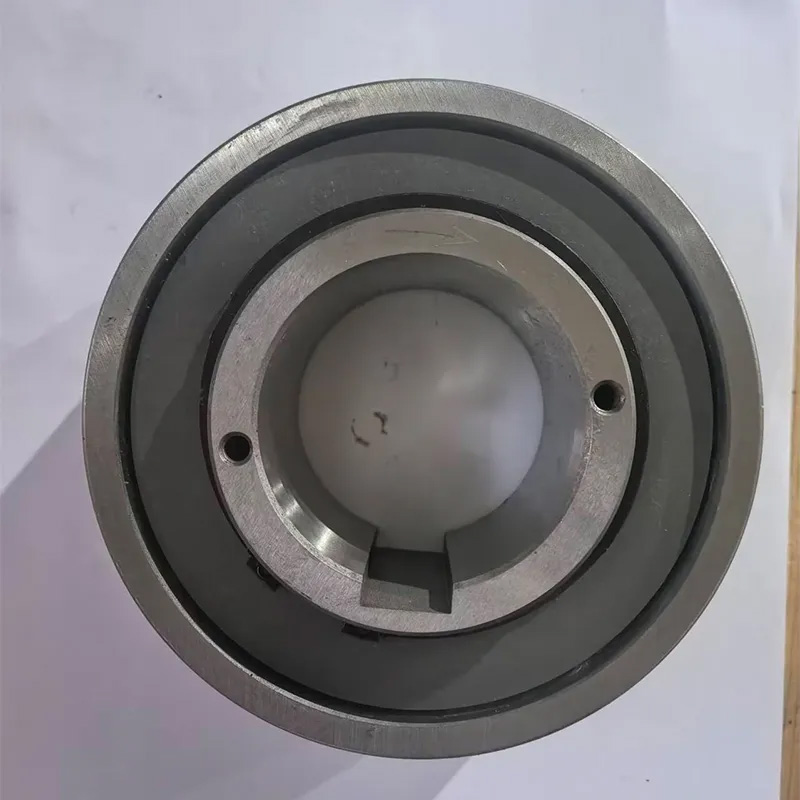
-
About Us
Company Profile Cooperative Clients Honors and Qualifications -
Product Center
energy industry chemical industry Grain and oilseed industry paper industrypharmaceutical industry iron and steel industry Gearbox accessories -
News Updates
Company News -
Contact Us
mobile phone: 131-3221-3899 Mr. Wang telephone:022-85109206 email:tianjinhansen@126.com address:No. 6 Jingli Road, Beichen Economic Development Zone, Beichen District, Tianjin City Contact Us Online Message

 Copyright ©2025Hansen (Tianjin) Transmission Equipment Co., Ltd. All rights reservedJin ICP No. 20002093-1Technical SupportTianjin Zhongying Tianxia Technology Co., Ltd
 - About Us